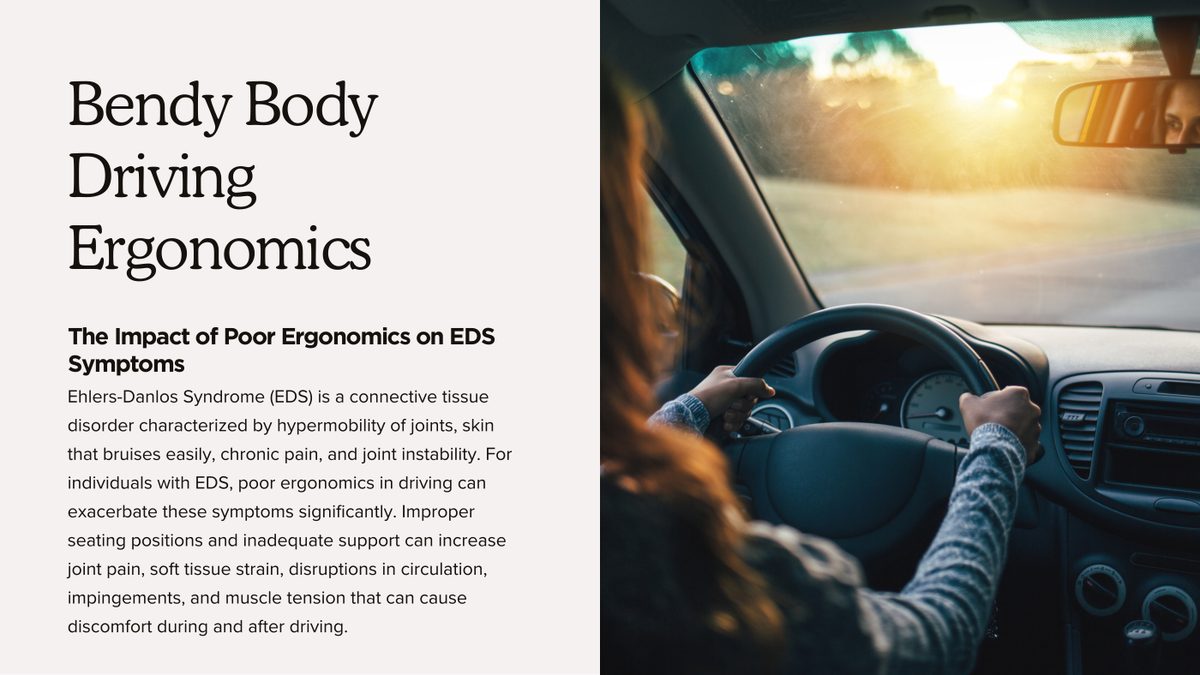
Why cars wreck bendy bodies
Ehlers-Danlos Syndrome is a connective tissue disorder characterized by hypermobility of joints, skin that bruises easily, chronic pain, and joint instability. For bendy bodies, poor ergonomics in driving can exacerbate symptoms significantly: improper seating positions and inadequate support increase joint pain, soft tissue strain, disruptions in circulation, impingements, and muscle tension that cause discomfort during and after driving.
The stability-seeking reframe
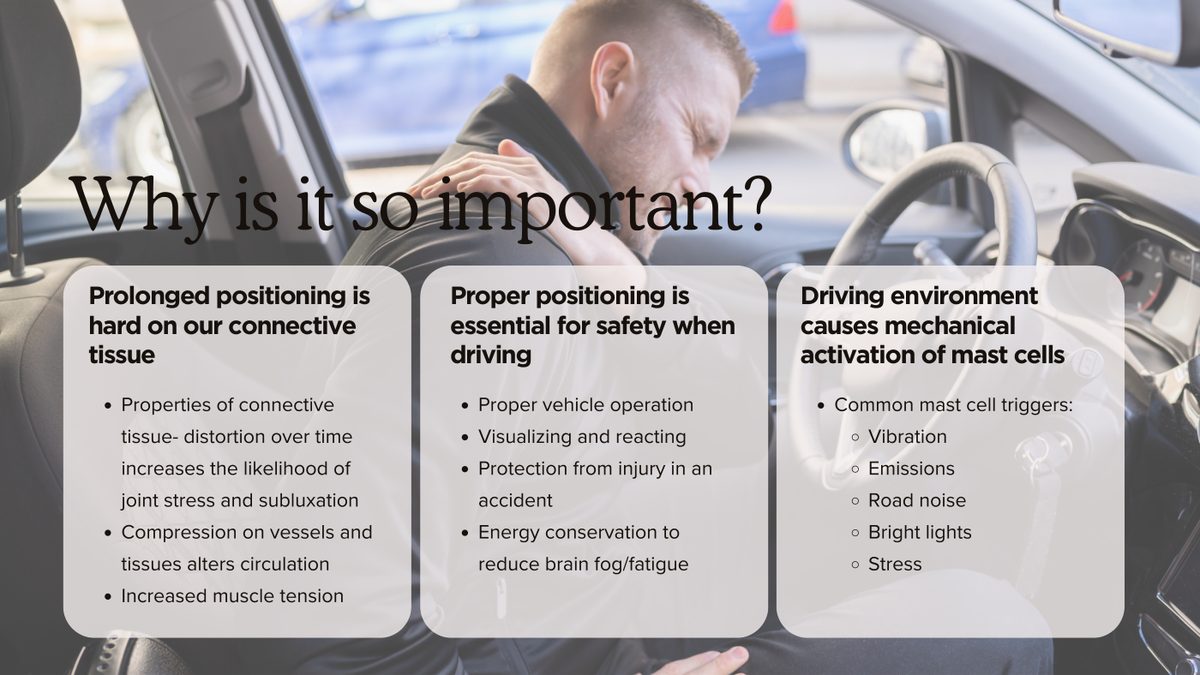
The death grip on the wheel. The knee braced against the door. The shoulder creeping toward your ear. These are not bad habits, and they are not nerves. They are stability seeking: your muscles doing the structural work your ligaments keep subcontracting out, on every curve and over every pothole, for the whole drive. Your body is right to complain. The fix just lives in the seat, not in you.
Why it matters so much
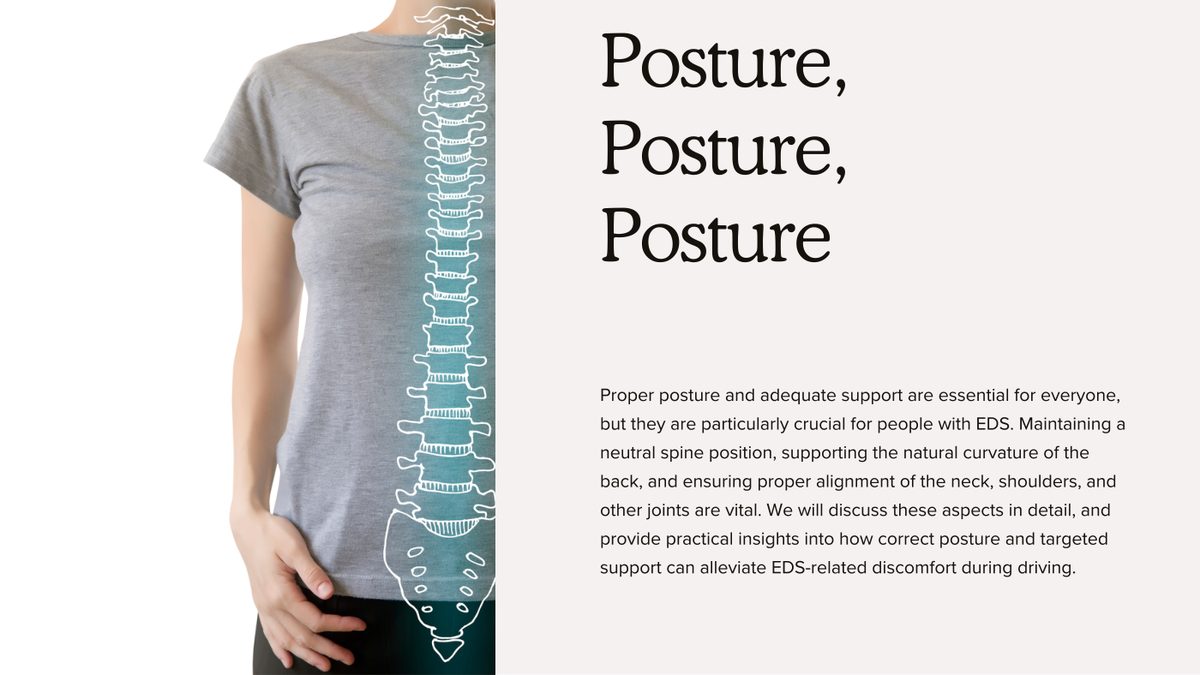
Posture, posture, posture
Proper posture and adequate support are essential for everyone, but they are particularly crucial for bendy bodies. Maintaining a neutral spine, supporting the natural curvature of the back, and ensuring proper alignment of the neck, shoulders, and other joints are vital. The rest of this course walks exactly how to get there, one adjustment at a time.