Bolds the start of each word as a visual anchor. Helps some people focus; off by default.
Font
Module 8 · Part One
POTS, Blood Pooling & Compression
(why standing up can be a battle, and what helps)
Lesson 1 of 4
Listen to this lesson
Narration coming soon
A note before we begin. You deserve to understand why standing up can feel like such a battle, and to be handed real tools for it. We will go gently, a little at a time, with nothing to memorize and nothing to be tested on. The hydration and salt pieces especially are worth running by your own doctor, since your heart and blood pressure are uniquely yours.
Module 8 · Lesson 1
What POTS Actually Is
Have you ever stood up and felt the room tilt, your heart suddenly pound, your vision go swimmy, a wave of exhaustion roll through you for no reason anyone could name? There is a name for that, and it is not anxiety.
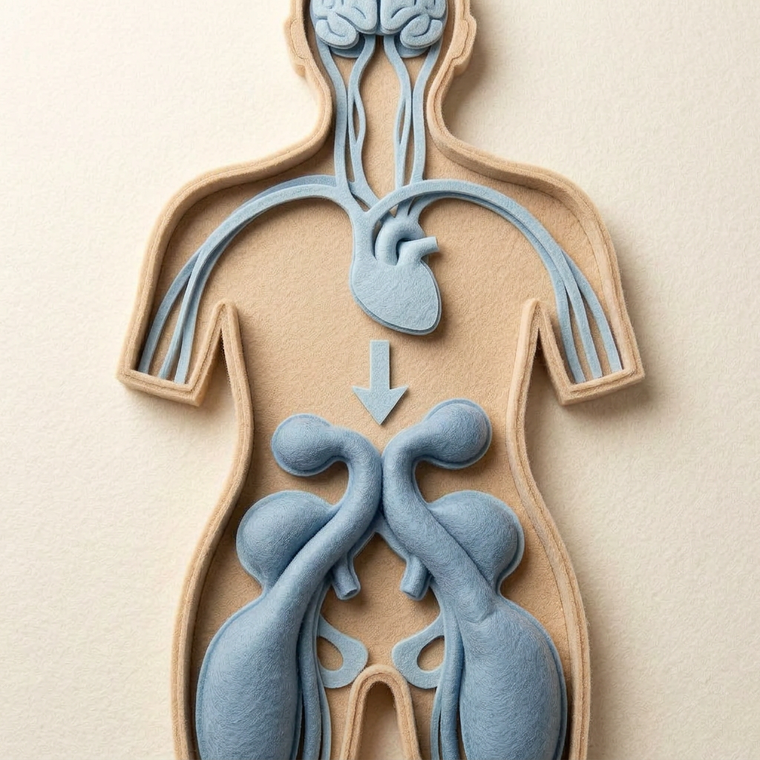
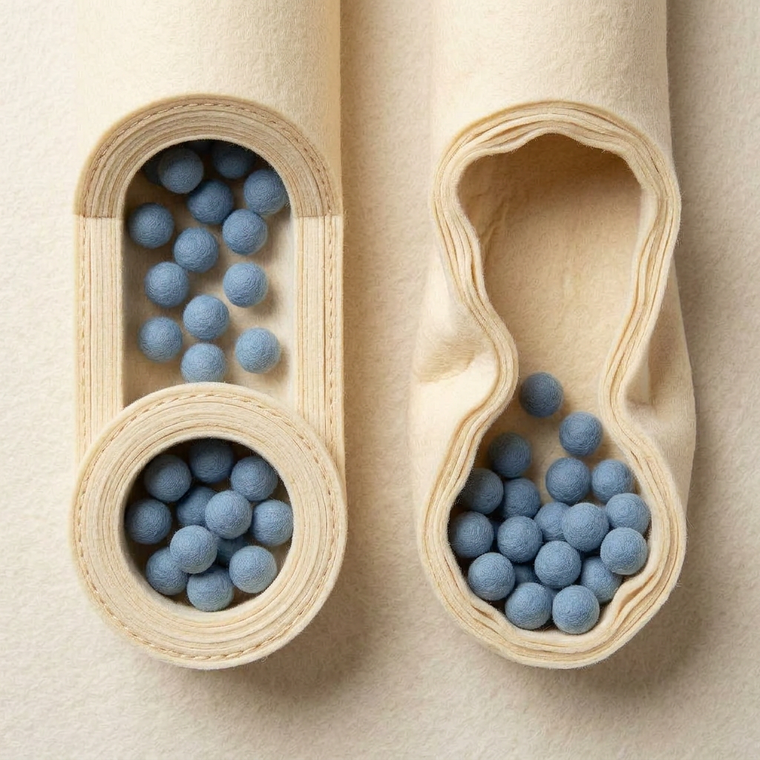
It is called POTS, which stands for postural orthostatic tachycardia syndrome, and it is a form of dysautonomia, a hiccup in the automatic nervous system that runs your heart rate, your blood pressure, all the things you never have to think about. Here is the simple version of what goes wrong. When you stand, gravity pulls your blood downward, and a healthy system instantly squeezes your blood vessels to push it back up to your brain. In a body like ours, that squeeze does not happen well. The blood pools low instead, your brain comes up a little short, and your heart races to try to make up the difference.
Your racing heart was never panic. It was your heart doing the work of a vascular system that did not get the memo to squeeze.
That single mechanism explains the whole miserable cluster, the dizziness, the brain fog, the pounding, the fatigue, the sense that being upright is a tax you cannot afford. Let me show you why this lives in a body like ours, and then the tools that genuinely help.
Module 8 · Lesson 2
Why It Travels With Us
POTS shows up so often alongside hypermobility that they are practically traveling companions, and the reason is, by now, beautifully familiar. It comes back to connective tissue.
Your blood vessels are built from connective tissue too. So in a body like ours, the vessels are a little more stretchy, a little more giving, which means they are less able to clamp down and push blood back up when you stand. The blood pools more easily, especially low in your abdomen and pelvis, and the whole orthostatic problem deepens.
There is a second piece, and it reaches straight back to the corset from Module 4. Your transverse abdominis is meant to hug your midsection from the inside, a kind of built-in internal compression that helps keep blood from settling in your belly and helps push your blood volume back up toward your heart. In a body like ours, that muscle is so often not reliably switched on, which means the very thing designed to fight the pooling is frequently off duty. The deficit quietly compounds the problem, pooling made worse by the missing squeeze that was supposed to answer it.
Layer on the mast cell activity from the last module, which can widen the vessels even further during a flare, and you have a system genuinely working against gravity every time you rise.
You are not deconditioned, and you are not anxious. Your blood is, quite literally, not getting all the way up to your brain.
I name this plainly because so many of us were told it was in our heads, were handed an anxiety label and sent home. The pounding heart can certainly feel like panic. It is not. It is physics and physiology, and physics and physiology have tools.
Module 8 · Lesson 3
The Tools That Actually Help
Here is the part I love, because these tools are simple, they work, and most of them cost almost nothing.
The biggest surprise first. For years, everyone was told to wear compression socks, and they help a little, but the blood that truly matters is not pooling in your feet. It is pooling up in your abdomen and pelvis. So the most effective compression is abdominal compression, something snug across your middle, high-waisted compression leggings, an abdominal binder, even firm supportive layers. That is where the volume is, so that is where the pressure does the most good.
Then the two that expand your actual blood volume: salt and fluids, generous amounts of both, so there is simply more blood for the system to use. This is the piece to run by your doctor first, since your heart and blood pressure are yours alone, but for many of us, more salt and more water is a genuine turning point.
There is also one beautifully simple positional tool. When you are crashing or feeling faint, lying down with your legs up the wall, your legs above the level of your heart, for twenty-five to forty-five minutes, can refill your central blood volume and lift your cerebral blood flow for hours afterward. It is not only rest. It is a reset.
Module 8 · Lesson 4
Your Core Is a POTS Tool Too
Now for the connection that ties this whole course together, and it genuinely delights me every time.
We just said the most effective compression is around your abdomen. So think about what you already met in Module 4. The transverse abdominis, your deep corset, is internal abdominal compression. It is built to gently squeeze your midsection from the inside, in exactly the place the blood pools. When that muscle is awake and doing its job, it helps push pooled blood back up toward your brain with every engagement, all on its own.
The same deep core we built for your stability, your posture, and your aching neck turns out to be a POTS tool too. One muscle, quietly doing four jobs at once.
This is the heart of why we work the whole system instead of chasing each symptom alone. Your stability work is your dysautonomia work. Your breath work is your stability work. It is all one connected body, and tending one part lifts the others. Next, we turn to the deep, bottomless tiredness underneath so much of this, and the art of pacing that protects you, energy, and the crashes we are learning to soften. I will meet you there.
Your Take-Away
My POTS Toolkit & Tracker. A fill-in recipe card for what actually helps your body, plus a gentle weekly tracker for hydration, salt, compression, and legs-up. Fill it on screen, or print it for your binder. Over the course, these pages gather into your own personalized manual.
Module 1 is yours to explore freely. The rest opens when you enroll in The Movement Primer, the live group program, and it stays yours, to revisit at whatever pace your body asks for.